【要注意】クリスマスツリーがカビ臭い原因とは? 出した瞬間に広がる異臭の正体と正しい対策・収納方法をプロが解説|カビバスターズ東海
2025/12/24
【要注意】クリスマスツリーがカビ臭い原因とは?
出した瞬間に広がる異臭の正体と正しい対策・収納方法をプロが解説|カビバスターズ東海
見た目はキレイでも中は危険 ── 収納中に進行する「見えないカビ」と再発させない保管対策
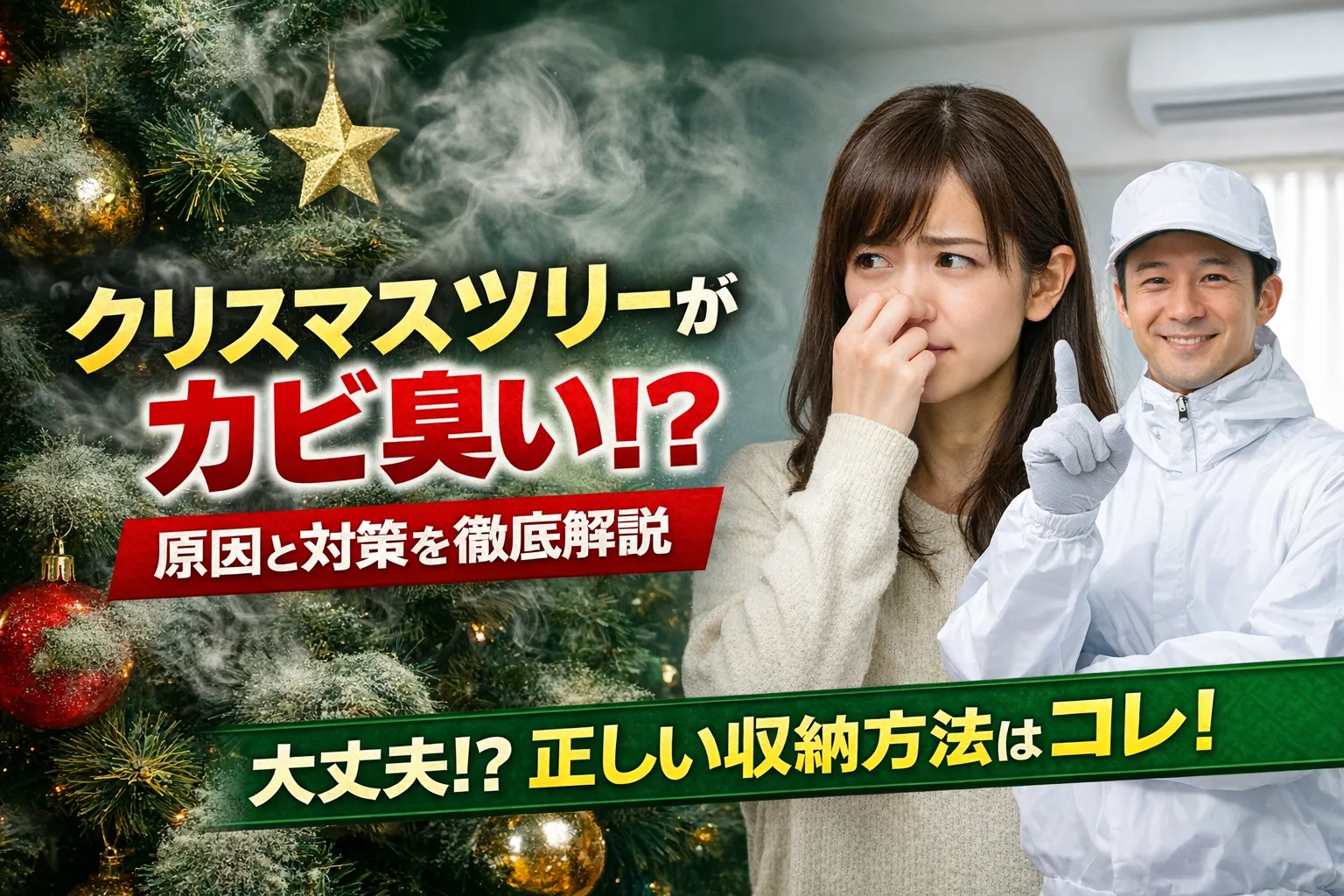
クリスマスを心待ちにして、押し入れやクローゼットからクリスマスツリーを出した瞬間、「カビ臭い…」「部屋に嫌なニオイが広がる」と感じたことはありませんか?
実はこの現象、近年とても増えており、カビバスターズ東海にも毎年12月になると「クリスマスツリーが臭う」「飾りたいのに使えない」といったご相談が寄せられています。
その大きな原因は、使用後の収納方法と保管環境にあります。人工のクリスマスツリーであっても、設置中に空気中の湿気や結露を吸い込み、十分に乾燥しないまま収納してしまうことで、袋や箱の中でカビが繁殖してしまうのです。特に日本の住宅は梅雨から夏にかけて湿度が高く、収納スペースは風通しが悪くなりやすいため、オフシーズンの間に「見えないカビ」が静かに進行します。
さらに注意が必要なのは、見た目にはカビが確認できなくても、カビ臭だけが強く残るケースです。この状態でそのまま飾ってしまうと、室内にカビ胞子が拡散し、アレルギー症状や体調不良の原因になることもあります。特に小さなお子様や高齢の方がいるご家庭では、決して軽視できません。
本記事では、クリスマスツリーがカビ臭くなる具体的な原因を整理し、今すぐできる対策、そして翌年も安心して使うための正しい収納方法まで、専門業者の視点でわかりやすく解説します。
「今年こそ、気持ちよくクリスマスを迎えたい」
そうお考えの方は、ぜひ参考にしてください。
目次
クリスマスツリーがカビ臭いと感じるのはなぜ?
出した瞬間に広がる異臭の正体とは
クリスマスツリーを収納から出した瞬間、「ツンとしたニオイ」「湿ったような嫌な臭い」「カビ臭さ」を感じるケースは、決して珍しくありません。毎年同じツリーを使っているのに、ある年から急に臭いが気になるようになった、というご相談も多く寄せられています。この異臭の正体は、ほとんどの場合カビが発生・繁殖したことによるものです。
まず理解しておきたいのは、人工のクリスマスツリーであってもカビは発生するという点です。多くの方は「人工物だから大丈夫」「生木じゃないからカビない」と考えがちですが、実際にはツリーの葉材(PVC・PE素材)、金属製の支柱、接合部、さらには収納袋や箱の内側にまで湿気が溜まり、カビが繁殖する条件がそろってしまいます。
次に重要なのが、「使用中ではなく収納中にカビが進行する」という点です。クリスマスツリーは12月の短期間だけ使用され、その後は長期間収納されます。この収納期間中、日本特有の高湿度環境(梅雨・夏・秋)にさらされることで、収納袋や箱の内部湿度が60%以上になり、カビが活発に増殖します。特に、使用後すぐに片付けてしまい、十分に乾燥させないまま収納している場合、内部に残った湿気が逃げ場を失い、カビの温床となってしまうのです。
さらに厄介なのは、見た目では異常が確認できないケースが多いという点です。カビは必ずしも黒や白の斑点として現れるわけではなく、素材の内部や繊維の奥に入り込んで繁殖することがあります。その結果、表面はキレイなのに、袋を開けた瞬間にカビ臭だけが一気に放出される、という現象が起こります。これが「出した瞬間に広がる異臭」の正体です。
また、暖房を入れた室内にツリーを設置すると、温度差によってツリー内部の揮発成分やカビ由来の臭気成分が一気に拡散し、より強く臭いを感じることもあります。これにより、「部屋全体が臭くなった」「家族が嫌がる」といった二次的な問題にも発展します。
このカビ臭を放置したまま飾り付けを行うと、カビ胞子が室内に拡散し、アレルギー症状、咳、喉の違和感、頭痛などを引き起こす可能性もあります。特に小さなお子様や高齢の方がいるご家庭では、健康面のリスクとして決して軽視できません。
つまり、クリスマスツリーがカビ臭くなる原因は、素材・湿度・収納環境・保管期間が複合的に重なった結果なのです。
When you take a Christmas tree out of storage and immediately notice a sharp smell, a damp and unpleasant odor, or a musty, moldy scent, it is by no means uncommon. Many people tell us that although they have used the same tree every year, the smell suddenly became noticeable one year. In most cases, the source of this unpleasant odor is mold that has developed and multiplied over time.
The first point to understand is that even artificial Christmas trees can develop mold. Many people assume that artificial materials are safe, thinking, “It’s not real wood, so it won’t get moldy.” However, in reality, moisture can accumulate in the tree’s leaf materials (such as PVC or PE), metal poles, joints, as well as inside storage bags or boxes. Once moisture is present, the conditions for mold growth are easily met.
Another key factor is that mold growth progresses not during use, but during storage. Christmas trees are typically used only for a short period in December and then stored away for a long time. During this storage period, Japan’s naturally humid climate—especially during the rainy season, summer, and autumn—can cause the humidity inside storage bags or boxes to exceed 60%. Under these conditions, mold can rapidly multiply. This risk increases significantly when the tree is put away immediately after use without being thoroughly dried, as trapped moisture has nowhere to escape and becomes a breeding ground for mold.
What makes this problem even more troublesome is that visible signs are often absent. Mold does not always appear as obvious black or white spots. Instead, it can grow deep inside materials or fibers. As a result, the tree may look perfectly clean on the surface, yet release a strong musty odor the moment the storage bag is opened. This is the true reason behind the “odor that spreads instantly when you take it out.”
In addition, when the tree is set up in a heated room, the temperature difference can cause volatile compounds and mold-related odor components trapped inside the tree to be released all at once, making the smell even stronger. This can lead to secondary problems such as “the entire room smells bad” or “family members find it unpleasant.”
If a moldy-smelling tree is displayed without proper treatment, mold spores can spread throughout the room, potentially causing allergic reactions, coughing, throat irritation, or headaches. This risk should not be underestimated, especially in households with small children or elderly family members.
In summary, the musty odor of a Christmas tree is the result of multiple factors acting together, including the materials used, humidity levels, storage conditions, and the length of time the tree is kept in storage.
見た目はキレイでも要注意
クリスマスツリー内部で進行する「見えないカビ」
クリスマスツリーのカビ問題で特に厄介なのが、「見た目はキレイなのに臭う」というケースです。多くの方が、黒ずみや白い斑点など目に見えるカビがなければ問題ないと判断してしまいます。しかし実際には、カビは必ずしも目に見える形で発生するとは限りません。これが、クリスマスツリーのカビ臭トラブルを長引かせる最大の要因です。
カビは、素材の表面だけでなく、内部や隙間、繊維の奥深くに入り込んで繁殖します。人工クリスマスツリーの場合、葉材に使われているPVCやPE素材は細かな凹凸構造を持っており、その隙間に湿気と汚れが入り込むことで、カビが内部から増殖します。さらに、支柱部分や枝の付け根、接合部などは空気が滞留しやすく、乾燥しにくいため、カビにとって非常に好都合な環境となります。
また、収納袋や箱の内側に発生したカビが、ツリー本体に移行しているケースも少なくありません。収納袋は布製や不織布製のものが多く、一度湿気を含むと乾きにくく、内部でカビが発生しやすい特徴があります。この「収納環境のカビ」が、ツリーに付着・侵入し、翌年にはツリー自体が臭う原因になるのです。
見えないカビの怖さは、臭いとして先に現れる点にあります。カビが増殖すると、揮発性有機化合物(いわゆるカビ臭成分)を放出します。これらは空気中に拡散しやすく、袋を開けた瞬間や室内に設置した直後に、一気に臭いとして感じられます。そのため、「出した瞬間に臭う」「飾ったら部屋全体が臭くなった」といった現象が起こるのです。
さらに問題なのは、この状態で消臭スプレーや芳香剤を使用しても、根本的な解決にはならないという点です。表面的な臭いは一時的に抑えられても、素材内部に潜むカビは生き続け、時間が経つと再び臭いを放ちます。結果として、「毎年臭う」「年々ひどくなる」といった悪循環に陥ります。
このように、見た目がキレイであることは、決して安全の証明にはなりません。クリスマスツリーの内部で進行する「見えないカビ」は、収納方法・保管環境・湿度管理が適切でない限り、確実に増殖していきます。次の項目では、こうした見えないカビを発生させないために、家庭で注意すべきポイントと具体的な対策について詳しく解説していきます。
One of the most troublesome aspects of mold problems with Christmas trees is the situation where the tree looks perfectly clean but still smells unpleasant. Many people assume that if there are no visible black or white spots, there is no mold issue. However, mold does not always appear in a visible form, and this misconception is one of the main reasons mold-related odors persist year after year.
Mold can grow not only on surfaces but also inside materials, in small gaps, and deep within fibers. In artificial Christmas trees, the leaf materials—such as PVC or PE—have fine uneven structures that trap moisture and dirt. These conditions allow mold to grow from the inside. In addition, areas such as support poles, branch joints, and connection points tend to retain moisture and have poor air circulation, making them ideal environments for mold growth.
Another common issue is mold originating from storage bags or boxes. Many storage bags are made of fabric or nonwoven materials that easily absorb moisture and dry slowly. Mold that develops inside these bags can transfer to the tree itself, becoming the source of odor the following year.
What makes invisible mold particularly dangerous is that odor often appears before any visible signs. As mold grows, it releases volatile organic compounds—the substances responsible for the musty smell. These compounds spread easily through the air, causing a strong odor the moment the storage bag is opened or the tree is set up indoors.
Using deodorizing sprays or air fresheners in this situation does not address the root cause. While the smell may temporarily fade, the mold hidden inside the materials remains active and eventually releases odor again. This leads to a cycle where the smell worsens each year.
In short, a clean appearance does not guarantee safety. Invisible mold growing inside a Christmas tree will continue to spread unless proper storage methods, environmental control, and humidity management are implemented. In the next section, we will explain concrete steps to prevent this invisible mold and keep your tree safe and odor-free year after year.
人工ツリーでも安心できない理由
素材・構造・湿気がカビを招くメカニズム
「人工のクリスマスツリーだからカビは生えない」
この認識は非常に多いのですが、実際には人工ツリーこそカビが発生しやすい条件を多く抱えているケースが少なくありません。カビの発生は“天然か人工か”ではなく、素材の特性・構造・湿気の滞留によって決まります。
まず素材の問題です。人工クリスマスツリーの葉材には、主にPVC(ポリ塩化ビニル)やPE(ポリエチレン)が使用されています。これらの素材は一見すると水を吸わないように思われがちですが、実際には表面に微細な凹凸や静電気による汚れの付着が起こりやすく、空気中の湿気やホコリ、皮脂汚れなどが絡み合ってカビの栄養源になります。特に装飾作業中に触れることで付着した皮脂は、カビにとって非常に好条件です。
次に構造的な問題があります。人工ツリーは、枝を折り畳めるように複雑な接合部や支柱構造を持っています。枝の付け根・支柱内部・金属と樹脂の境目は空気が滞留しやすく、乾燥しにくい場所です。ここに一度湿気が入り込むと、表面が乾いたように見えても内部では湿潤状態が続き、カビが静かに繁殖していきます。
さらに見逃せないのが湿気の影響です。クリスマスツリーは、暖房を使用する冬場の室内に設置されることが多く、室内外の温度差による結露が発生しやすい環境に置かれます。この微量な結露が枝や支柱に付着し、そのまま十分に乾燥しない状態で収納されることで、収納袋や箱の内部に湿気が持ち込まれます。その結果、収納中に湿度60%以上の環境が長期間続き、カビが一気に増殖するのです。
また、人工ツリーは「毎年同じものを使い続ける」ため、一度入り込んだカビが年々蓄積していくという特徴があります。見た目が変わらないため異変に気づきにくく、気づいたときには強いカビ臭として現れます。これが「去年までは大丈夫だったのに、今年から臭う」という現象の正体です。
このように、人工ツリーであっても、素材・構造・湿気という三つの要素が重なることで、カビは確実に発生・進行します。
Many people believe that artificial Christmas trees do not develop mold simply because they are not made from natural materials. However, in reality, artificial trees often contain multiple factors that make mold growth more likely. Mold development depends not on whether a product is natural or artificial, but on the combination of material properties, structural design, and moisture retention.
First, let’s look at the materials. Artificial Christmas trees are commonly made from PVC (polyvinyl chloride) or PE (polyethylene). Although these materials are often thought to be water-resistant, their surfaces contain microscopic irregularities and easily attract dust due to static electricity. Moisture in the air, dust, and skin oils transferred during decoration work can accumulate on these surfaces, providing nutrients for mold growth.
Next is the structural issue. Artificial trees are designed to fold and collapse, which means they contain many joints, branch bases, and internal support poles. Branch connections, internal poles, and the boundaries between metal and plastic parts tend to trap moisture and restrict airflow. Even if the surface appears dry, moisture can remain inside these areas, allowing mold to grow unnoticed.
Moisture plays an especially critical role. Christmas trees are typically placed in heated rooms during winter, where temperature differences between indoor and outdoor air can cause condensation. This small amount of moisture can cling to branches and supports. If the tree is stored before being fully dried, that moisture is carried into storage bags or boxes. As a result, humidity levels inside storage can exceed 60% for extended periods, creating ideal conditions for mold growth.
Another important point is that artificial trees are reused year after year. Once mold enters the structure, it can accumulate over time. Because the appearance often remains unchanged, the problem goes unnoticed until a strong musty odor suddenly appears. This explains why many people say, “It was fine last year, but this year it smells.”
In summary, even artificial Christmas trees are highly susceptible to mold when material characteristics, structural complexity, and moisture combine.
日本の住宅環境がカビを増やす
高湿度・結露・収納環境との深い関係
クリスマスツリーのカビ臭トラブルを理解するうえで欠かせないのが、日本特有の住宅環境がカビの発生を後押ししているという事実です。人工ツリーそのものに原因があるだけでなく、日本の気候と住宅構造、そして収納環境が重なることで、カビは非常に発生しやすくなります。
まず最大の要因は、日本の「高湿度環境」です。日本は四季がはっきりしている一方で、梅雨・夏・秋にかけて湿度が非常に高くなります。特に梅雨時期には、室内の相対湿度が70%を超えることも珍しくありません。カビは一般的に湿度60%以上で活発に増殖すると言われており、日本の住環境は一年の大半がカビにとって好条件となっています。
次に注目すべきなのが「結露」です。近年の住宅は高気密・高断熱化が進み、冬場は暖房によって室内が暖かく保たれます。その結果、外気との温度差が大きくなり、壁・窓・収納内部などで結露が発生しやすくなっています。クリスマスツリーはこうした暖房環境の中で使用されるため、枝や支柱に目に見えないレベルの水分が付着しやすくなります。この水分が完全に乾かないまま収納されることで、カビの発生リスクが一気に高まります。
さらに問題となるのが、日本の住宅に多い「収納環境」です。押し入れやクローゼットは、通気性が低く、空気が滞留しやすい構造になっています。特に北側の部屋や外壁に面した収納は温度が低くなりやすく、内部で結露が起こりやすい傾向があります。そこにクリスマスツリーのような大型で通気しにくい物を収納すると、湿気が逃げ場を失い、カビが増殖する密閉空間が生まれてしまいます。
また、「床に直置き」「収納の最奥に押し込む」といった保管方法も、カビを助長する要因です。床付近は湿気が溜まりやすく、空気の流れも弱いため、収納物が常に湿った空気にさらされる状態になります。このような環境で長期間保管されたクリスマスツリーは、見た目に変化がなくても内部で確実にカビが進行していきます。
つまり、クリスマスツリーのカビ問題は、単なる保管ミスではなく、日本の気候・住宅構造・収納習慣が複合的に関係した結果なのです。
To fully understand moldy odors in Christmas trees, it is essential to recognize how Japan’s unique housing environment actively promotes mold growth. The issue is not limited to the tree itself; rather, Japan’s climate, housing structure, and storage practices combine to create ideal conditions for mold.
The primary factor is Japan’s high humidity. From the rainy season through summer and autumn, indoor humidity levels frequently rise above 70%. Mold generally becomes active at humidity levels above 60%, meaning that Japanese homes provide favorable conditions for mold for much of the year.
Another critical factor is condensation. Modern Japanese homes are highly airtight and well insulated, which keeps interiors warm during winter. However, this creates significant temperature differences between indoor and outdoor air, leading to condensation on walls, windows, and inside storage spaces. Christmas trees are often used in heated rooms, where microscopic moisture can form on branches and support poles. If this moisture is not fully dried before storage, it greatly increases the risk of mold growth.
Storage environments common in Japanese homes also contribute to the problem. Closets and traditional storage spaces often have poor ventilation, allowing air to stagnate. Storage areas located on the north side of a home or along exterior walls tend to be cooler and more prone to condensation. When large items like Christmas trees are stored in these spaces, moisture becomes trapped, creating a sealed environment where mold can easily thrive.
Additionally, placing items directly on the floor or pushing them deep into storage spaces further worsens the situation. Humidity tends to accumulate near the floor, and limited airflow allows moisture to persist. Even if there are no visible changes, mold can steadily grow inside the tree over time.
やってはいけないNG対処法
消臭スプレー・アルコール拭きだけでは解決しない
クリスマスツリーがカビ臭いと感じたとき、多くの方が最初に行うのが「消臭スプレーをかける」「アルコールで拭く」といった自己対応です。一見すると正しい対処のように思えますが、これらの方法は根本的な解決にならないどころか、かえって状況を悪化させる可能性があります。
まず消臭スプレーについてです。市販の消臭スプレーや芳香剤は、臭い成分を一時的に覆い隠すことを目的としています。そのため、スプレー直後は「臭いが消えた」と感じるかもしれません。しかし、カビそのものを除去・不活化しているわけではないため、内部に残ったカビが時間の経過とともに再び臭気成分を放出します。結果として、「翌日にはまた臭う」「毎年同じことを繰り返している」という悪循環に陥ります。
次に多いのが、アルコール(エタノール)による拭き取りです。アルコールには一定の殺菌効果があるため、軽度の表面汚染には有効な場合もあります。しかし、人工クリスマスツリーの場合、カビは素材の内部や枝の付け根、接合部に入り込んで繁殖しているケースがほとんどです。表面を拭くだけでは、内部に潜むカビには全く届かないのが現実です。
さらに注意すべき点として、アルコールの過剰使用は素材劣化の原因になります。PVCやPE素材は、繰り返しアルコールを使用することで硬化やひび割れを起こすことがあり、そこにさらに湿気や汚れが入り込みやすくなります。その結果、かえってカビが再発・拡大しやすい状態を作ってしまうこともあります。
また、天日干しや暖房の風を直接当てるといった方法も、NG対処法の一つです。確かに一時的に乾燥したように見えますが、内部まで均一に乾燥させることは難しく、乾燥と吸湿を繰り返すことで結露が発生しやすくなります。これにより、内部環境がさらにカビに適した状態になるケースもあります。
これらのNG対処法に共通する問題点は、「臭い」や「表面」だけを見て対処している点です。カビ問題の本質は、素材内部に根を張ったカビの存在と、再発を招く湿度環境にあります。これを無視した対処では、根本解決には至りません。
つまり、クリスマスツリーのカビ臭対策で最も避けるべきなのは、「とりあえず何かをする」自己流対応です。
When people notice a musty or moldy smell coming from a Christmas tree, the first thing many of them do is try a quick fix, such as spraying deodorizer or wiping the surface with alcohol. While these actions may seem like the right response at first, they do not address the root of the problem and can even make the situation worse.
Let’s start with deodorizing sprays. Most commercially available deodorants and air fresheners are designed to temporarily mask unpleasant odors. As a result, the smell may seem to disappear immediately after spraying. However, these products do not remove or deactivate the mold itself. Mold that remains inside the tree continues to release odor-causing compounds over time, leading to the familiar cycle of “it smells again the next day” or “the same problem comes back every year.”
Another common approach is wiping the tree with alcohol (ethanol). Alcohol does have some disinfecting properties and can be effective for light contamination on surfaces. However, in the case of artificial Christmas trees, mold usually grows deep inside the materials, around branch bases, and within joints and connection points. Simply wiping the surface cannot reach mold that has penetrated into the interior, making this method largely ineffective.
It is also important to note that excessive use of alcohol can damage the materials themselves. Repeated exposure to alcohol can cause PVC or PE materials to harden or crack, creating small gaps where moisture and dirt can accumulate. Ironically, this can make the tree even more susceptible to mold growth and recurrence.
Methods such as placing the tree in direct sunlight or blowing warm air from a heater are also considered improper countermeasures. While the surface may appear dry temporarily, it is difficult to achieve uniform drying throughout the interior. Repeated cycles of drying and moisture absorption can actually promote condensation inside the tree, further creating an environment that favors mold growth.
What all of these ineffective approaches have in common is that they focus only on the odor or the visible surface. The real issue with mold lies in its presence deep within the materials and the humid conditions that allow it to return. Ignoring these factors means true resolution is impossible.
In short, the biggest mistake when dealing with a moldy-smelling Christmas tree is relying on improvised, “do-something-for-now” solutions. Without addressing the underlying cause, such measures will never lead to a lasting solution.
今すぐできる応急対策
クリスマスツリーがカビ臭いときの正しい初期対応
クリスマスツリーを出した瞬間にカビ臭さを感じた場合、「もう使えないのでは?」と不安になる方も多いと思います。しかし、臭いの程度や状態によっては、適切な初期対応を行うことで被害の拡大を防ぐことが可能です。ここでは、家庭で今すぐ実践できる“正しい応急対策”を、段階的に解説します。
まず最初に行うべきことは、室内に臭いを広げないことです。カビ臭を感じたら、そのままリビングなどに長時間置かず、できるだけ早く換気の良い場所へ移動させてください。窓を開けられる部屋や、屋外に近い玄関、ベランダ付近などが適しています。これは、カビ由来の臭気成分や胞子が室内に拡散するのを防ぐための重要な初動です。
次に行うのが、表面のホコリ除去です。乾いた柔らかい布やハンディモップを使い、葉の表面や枝の先端についたホコリを軽く落とします。この際、強くこすったり叩いたりすると、カビ胞子が舞い上がる恐れがあるため注意が必要です。掃除機を使う場合は、排気が室内に戻らないよう、可能であれば屋外で行うことをおすすめします。
その後、十分な換気と自然乾燥を行います。直射日光や暖房の風を直接当てるのではなく、風通しの良い日陰で数時間から半日程度、空気にさらしてください。これにより、ツリー内部にこもった湿気を外へ逃がし、カビがこれ以上活性化するのを抑える効果が期待できます。
ここで重要なのが、「やり過ぎない」ことです。アルコールを大量に吹きかける、洗剤で丸洗いする、といった行為は、前項で解説した通り逆効果になる可能性があります。応急対策の目的は、カビを完全に除去することではなく、被害の進行を止めることである点を理解しておく必要があります。
最後に、臭いの変化を確認してください。換気・乾燥後も強いカビ臭が残る場合や、時間が経つと再び臭いが戻る場合は、カビが素材内部まで進行している可能性が高い状態です。この段階では、家庭での対応には限界があり、専門的なカビ対策が必要になります。
つまり、正しい初期対応とは「隔離・軽清掃・乾燥・判断」の4ステップです。この判断を誤らず、早めに次の対応へ進むことが、被害拡大と健康リスクを防ぐ鍵となります。
When you notice a musty or moldy smell as soon as you take out your Christmas tree, it is natural to worry that it may no longer be usable. However, depending on the severity of the odor and the condition of the tree, taking the correct initial steps can help prevent the problem from worsening. Below is a step-by-step explanation of proper first-aid measures that can be done at home.
The first and most important step is to prevent the odor from spreading indoors. If you detect a moldy smell, avoid leaving the tree in living spaces. Move it as quickly as possible to a well-ventilated area, such as near an open window, an entryway close to the outdoors, or a balcony. This helps reduce the spread of mold-related odor compounds and spores inside the home.
Next, gently remove surface dust. Use a soft, dry cloth or a handheld duster to lightly clean the leaves and branch tips. Avoid rubbing or shaking the tree vigorously, as this can cause mold spores to become airborne. If you use a vacuum cleaner, it is best to do so outdoors to prevent exhaust air from circulating indoors.
The next step is thorough ventilation and natural drying. Rather than placing the tree in direct sunlight or blowing hot air from a heater, leave it in a shaded, well-ventilated area for several hours or up to half a day. This allows trapped moisture inside the tree to escape and helps suppress further mold activity.
It is also important not to overdo these measures. Spraying large amounts of alcohol or washing the tree with detergents can be counterproductive, as explained earlier. The goal of first-aid measures is not to completely eliminate mold, but to stop the situation from worsening.
Finally, check whether the odor has improved. If a strong musty smell remains or returns after some time, it is likely that mold has penetrated deep into the materials. At this stage, home remedies are no longer sufficient, and professional mold remediation should be considered.
In summary, proper initial response consists of four key steps: isolation, light cleaning, drying, and assessment. Making the right judgment at this stage is crucial to preventing further damage and health risks.
翌年も安心して使うために
クリスマスツリーの正しい収納方法と保管場所
クリスマスツリーのカビ臭トラブルを根本的に防ぐために最も重要なのが、使用後の収納方法と保管場所の見直しです。多くの場合、カビは使用中ではなく、オフシーズンの収納期間中に静かに進行します。つまり、「しまい方」を変えるだけで、翌年の状態は大きく変わります。
まず大前提として重要なのが、収納前の完全乾燥です。クリスマスツリーは設置中に空気中の湿気や結露を吸い込み、見た目以上に水分を含んでいます。片付ける際は、装飾を外したあとすぐに収納せず、風通しの良い場所で数時間から半日程度、陰干ししてください。枝の付け根や支柱部分までしっかり乾燥させることが、カビ予防の第一歩です。
次に意識したいのが、収納容器の選び方と中の湿度管理です。布製や不織布製の収納袋は通気性がある反面、湿気を含みやすい特徴があります。一方、ビニール製の袋や密閉ケースは湿気が逃げにくく、内部結露を起こしやすいという欠点があります。どのタイプを使用する場合でも、必ず除湿剤や調湿材を複数入れ、収納内部の湿度を下げる工夫が欠かせません。
さらに重要なのが、保管場所の選定です。押し入れやクローゼットの最奥、床に直置きする保管方法は、湿気が溜まりやすく、カビが発生しやすい典型的なNG環境です。理想的なのは、床から少し浮かせ、空気の流れがある場所での保管です。北側の収納や外壁に面した物置は結露が起きやすいため、可能であれば避けることをおすすめします。
また、収納後も「しまいっぱなし」にしないことが大切です。年に一度、梅雨時期や夏の終わりなどに収納場所を換気し、除湿剤を交換するだけでも、カビの発生リスクは大きく下がります。これは、クリスマスツリーだけでなく、季節用品全般に共通する重要な管理ポイントです。
つまり、翌年も安心してクリスマスツリーを使うためには、乾燥・除湿・通気・保管場所の四つを意識した収納管理が欠かせません。これらを習慣化することで、「出した瞬間にカビ臭い」というトラブルは、ほぼ防ぐことが可能です。
The most important factor in preventing moldy odors in Christmas trees is reviewing how and where the tree is stored after use. In most cases, mold does not develop while the tree is on display, but rather progresses quietly during the off-season storage period. Simply changing the way the tree is stored can make a significant difference the following year.
The first essential step is complete drying before storage. While displayed, Christmas trees absorb moisture from the air and from condensation, often more than people realize. After removing decorations, do not store the tree immediately. Instead, place it in a well-ventilated area and allow it to air-dry in the shade for several hours or up to half a day. Be sure that moisture around branch bases and support poles has fully dissipated.
Next, attention should be paid to the choice of storage containers and humidity control inside them. Fabric or nonwoven storage bags offer some breathability but tend to absorb moisture. Plastic bags or airtight containers, on the other hand, can trap moisture and promote condensation. Regardless of the container type, it is essential to place multiple dehumidifiers or moisture-absorbing materials inside to keep humidity levels low.
Selecting the right storage location is equally important. Placing the tree deep inside a closet, directly on the floor, or in poorly ventilated spaces creates ideal conditions for mold growth. The best option is to elevate the tree slightly off the floor and store it in an area with some air circulation. Storage spaces on the north side of a home or against exterior walls are more prone to condensation and should be avoided if possible.
It is also important not to leave the tree untouched throughout the year. Opening the storage area for ventilation and replacing dehumidifiers once a year—such as during the rainy season or at the end of summer—can significantly reduce the risk of mold growth. This practice applies not only to Christmas trees but to all seasonal items.
In summary, safely using your Christmas tree year after year requires storage management focused on drying, dehumidification, ventilation, and proper storage location. By making these practices routine, the common problem of a musty smell upon opening storage can be effectively prevented.
収納袋・箱・保管場所の落とし穴
押し入れ・クローゼットで起きるカビ再発リスク
クリスマスツリーのカビ問題は、「しっかり片付けたつもりでも翌年また臭う」という形で再発するケースが非常に多く見られます。その原因の多くは、収納袋・箱・保管場所の選び方に潜む落とし穴にあります。正しく乾燥させ、除湿対策を行っても、この三つのポイントを誤ると、カビは簡単に再発してしまいます。
まず注意したいのが収納袋や収納箱の素材です。布製や不織布製の収納袋は「通気性があるから安心」と思われがちですが、実際には湿気を吸いやすく、一度湿ると乾きにくいという欠点があります。梅雨時期や夏場に収納内部の湿度が上がると、袋そのものが湿気を溜め込み、内部でカビが発生・増殖する原因になります。一方、段ボール箱も吸湿性が高く、見えないうちに湿気とカビを抱え込んでしまうため、長期保管には不向きです。
次に、ビニール袋や密閉型プラスチックケースの落とし穴です。これらはホコリや外気を遮断できる反面、内部に残った湿気を逃がすことができません。収納前の乾燥が不十分な場合、袋や箱の中で内部結露が発生し、結果としてカビにとって最適な高湿度環境が長期間維持されてしまいます。「密閉=安全」とは限らない点は、非常に重要な注意点です。
そして最も見落とされがちなのが、保管場所そのものの環境です。押し入れやクローゼットは、構造上、空気の流れが悪く、湿気が滞留しやすい空間です。特に北側の部屋や外壁に面した収納は温度が低くなりやすく、内部で結露が発生しやすい傾向があります。さらに、収納の最奥や床に直置きした状態では、湿った空気が常に溜まり、カビが再発しやすい条件がそろってしまいます。
加えて、「一度しまったら一年間そのまま」という保管習慣も、再発リスクを高める要因です。除湿剤の交換をせず、換気もしないまま長期間放置すると、収納内部の湿度は確実に上昇します。その結果、ツリー本体だけでなく、収納袋・箱・周囲の壁や床にまでカビが広がるケースもあります。
つまり、クリスマスツリーのカビ再発は、ツリー単体の問題ではなく、収納袋・箱・保管場所が一体となって引き起こす環境トラブルなのです。
Many Christmas tree mold problems reappear the following year, even when people believe they stored the tree properly. In most cases, the cause lies in hidden pitfalls related to storage bags, boxes, and storage locations. Even with proper drying and dehumidification, mold can easily return if these factors are overlooked.
First, consider the materials used for storage bags and boxes. Fabric and nonwoven storage bags are often considered safe due to their breathability, but in reality, they absorb moisture easily and dry poorly once damp. During the rainy season or summer, humidity inside these bags can rise, allowing the bags themselves to retain moisture and promote mold growth. Cardboard boxes present a similar issue; their high absorbency makes them unsuitable for long-term storage, as they can harbor moisture and mold without visible signs.
Next are the pitfalls of plastic bags and airtight containers. While these options block dust and outside air, they also trap any remaining moisture inside. If the tree is not completely dry before storage, condensation can occur inside the container, maintaining a high-humidity environment ideal for mold growth. This highlights the important fact that “airtight” does not always mean “safe.”
Perhaps the most commonly overlooked factor is the storage location itself. Closets and traditional storage spaces often have poor airflow, allowing humidity to accumulate. Storage areas on the north side of a home or along exterior walls tend to be cooler and are especially prone to condensation. When a tree is placed deep inside these spaces or directly on the floor, damp air stagnates, creating perfect conditions for mold recurrence.
Another major risk factor is leaving stored items untouched for long periods. When dehumidifiers are not replaced and storage spaces are not ventilated for months at a time, humidity levels inevitably rise. In severe cases, mold can spread not only to the tree but also to storage bags, boxes, and even surrounding walls and floors.
In short, mold recurrence in Christmas trees is not an isolated issue. It is an environmental problem involving storage bags, containers, and storage locations as a whole.
家庭対応の限界とは?
捨てる前に知っておきたいプロ施工の判断基準
クリスマスツリーがカビ臭いと感じたとき、「自分で何とかできるのか」「もう捨てるしかないのか」と悩まれる方は少なくありません。しかし実際には、すべてのケースが廃棄一択というわけではなく、かといって家庭対応だけで解決できるケースにも明確な限界があります。ここでは、プロの視点から見た「家庭対応の限界」と「専門業者に相談すべき判断基準」を整理します。
まず、家庭対応が有効とされるのは、臭いが軽度で一時的な場合です。換気や自然乾燥を行ったあと、明らかに臭いが弱まり、数日経っても再発しない場合は、表面付近の湿気や軽微な汚染にとどまっている可能性があります。この段階であれば、正しい収納方法と湿度管理を徹底することで、再発を防げるケースもあります。
一方で、次のような症状が見られる場合は、家庭対応の限界を超えていると判断すべきです。
・換気や乾燥を行ってもカビ臭が消えない
・一時的に臭いが弱まっても、時間が経つと再び強くなる
・部屋に設置すると、短時間で空間全体が臭くなる
・目に見えるカビはなくても、ツンとした刺激臭がある
これらは、カビが素材内部や構造部に深く入り込んでいるサインです。この状態で消臭剤やアルコール拭きを繰り返すと、表面はごまかせても内部のカビは生き残り、結果的に年々症状が悪化することが多くなります。
さらに重要なのが、健康リスクの観点です。カビ臭が強い状態では、カビ胞子や揮発性成分が空気中に放出されています。小さなお子様、高齢者、アレルギー体質の方がいるご家庭では、咳・喉の違和感・頭痛・鼻炎症状などにつながる可能性があり、「我慢すれば使える」という判断はおすすめできません。
ここで検討すべき選択肢が、プロによるカビ対策施工です。専門業者は、目に見える部分だけでなく、素材内部や接合部に潜むカビまでを想定し、適切な薬剤選定・施工方法・安全管理を行います。また、除去だけでなく、再発を防ぐための原因分析と保管環境へのアドバイスまで含めて対応できる点が、家庭対応との大きな違いです。
つまり、「捨てるか使うか」で悩む前に重要なのは、現状が家庭対応の範囲を超えているかどうかを正しく見極めることです。この判断を誤らず、適切なタイミングでプロに相談することが、無駄な買い替えや健康リスクを避ける近道となります。
When a Christmas tree smells moldy, many people wonder whether they can fix the problem themselves or if the tree must be discarded. In reality, not all cases require disposal, but there is a clear limit to what can be resolved through home remedies alone. Below, we explain how to identify that limit and determine when professional treatment should be considered.
Home remedies may be effective when the odor is mild and temporary. If proper ventilation and natural drying noticeably reduce the smell and it does not return after several days, the issue may be limited to surface moisture or light contamination. In such cases, improving storage methods and humidity control may help prevent recurrence.
However, the following signs indicate that the problem has exceeded the limits of home treatment:
The musty odor remains even after ventilation and drying
The smell temporarily weakens but returns over time
The entire room begins to smell shortly after the tree is set up
A sharp, irritating odor is present even without visible mold
These symptoms suggest that mold has penetrated deep into the materials or internal structure of the tree. Repeated use of deodorizers or alcohol wipes may mask the smell but will not eliminate the underlying mold, often making the problem worse year after year.
Health considerations are also critical. Strong mold odors indicate that mold spores and volatile compounds are being released into the air. For households with small children, elderly individuals, or people with allergies, this exposure can cause coughing, throat irritation, headaches, or allergic symptoms. In such cases, continuing to use the tree is not advisable.
This is where professional mold remediation becomes an important option. Professionals assess not only visible surfaces but also hidden internal areas, selecting appropriate treatment methods and ensuring safety. More importantly, they address the root causes of mold growth and provide guidance on preventing recurrence through improved storage and environmental control.
In short, before deciding whether to throw a tree away, it is essential to accurately assess whether the problem exceeds the scope of home remedies. Consulting professionals at the right time can prevent unnecessary replacement costs and reduce health risks.
クリスマスツリーのカビ臭・カビ対策はカビバスターズ東海へ
原因特定から除去・再発防止までワンストップ対応
クリスマスツリーのカビ臭トラブルは、「一時的な臭い」「季節が終われば気にならない」と軽視されがちですが、実際には素材内部に進行したカビと、再発を招く環境要因が複合的に絡み合った問題です。これまで解説してきた通り、消臭スプレーやアルコール拭きといった家庭対応だけでは根本解決に至らないケースが多く、正しい判断と対策が求められます。
カビバスターズ東海では、クリスマスツリーのカビ臭についても「臭いを消す」ことを目的とせず、なぜカビが発生し、なぜ再発するのかという原因の特定から対応を行います。人工ツリーの素材特性、構造、使用環境、収納方法、保管場所までを総合的に確認し、表面に見えない“内部の問題”を前提に診断を行う点が、一般的な清掃や消臭対応との大きな違いです。
まず初期段階では、ツリーの状態や臭いの強さ、発生状況をヒアリング・確認し、家庭対応で止められる段階か、専門施工が必要な段階かを明確に判断します。不要な施工を勧めることはなく、「まだ自宅管理で改善できるケース」「プロ対応が必要なケース」をはっきり区別することで、無駄なコストや買い替えを防ぎます。
専門施工が必要と判断された場合には、素材内部まで届くカビ対策を前提とした処置を行います。これは、単なる表面清掃や臭い隠しではなく、カビの活動を抑制し、再び臭気成分を放出させないための工程です。施工時には安全性にも配慮し、室内空気環境や人体への影響を考慮した対応を徹底しています。
さらに、カビバスターズ東海が重視しているのが、再発防止まで含めたサポートです。カビを除去しても、保管環境が変わらなければ、翌年また同じ問題が起こります。そのため、施工後には、正しい乾燥方法、収納袋や箱の選び方、除湿対策、保管場所の改善ポイントまで具体的にご提案します。これにより、「今年は解決したけれど、来年また臭う」という悪循環を断ち切ることが可能になります。
また、クリスマスツリーは単体の問題に見えて、実際には押し入れやクローゼット、他の季節用品にもカビが広がっているケースが少なくありません。カビバスターズ東海では、必要に応じて住環境全体の湿度・収納環境の見直しも含めたアドバイスを行い、ご家庭全体のカビリスク低減につなげます。
「捨てるしかないと思っていた」「毎年我慢して使っていた」
そのようなクリスマスツリーこそ、一度専門的な視点で状態を確認する価値があります。原因を正しく見極め、適切な対策を講じることで、大切な季節行事を安心・快適に楽しめる環境を取り戻すことができます。
クリスマスツリーのカビ臭・カビ対策でお悩みの方は、原因特定から除去、そして再発防止までを一貫して対応できるカビバスターズ東海へ、ぜひご相談ください。季節用品のカビ問題を根本から解決するパートナーとして、確かな知識と実績でサポートいたします。
Moldy odors in Christmas trees are often dismissed as a temporary inconvenience or something that can be tolerated until the season ends. However, as explained throughout this article, these problems usually stem from mold that has progressed inside the materials and environmental factors that promote recurrence. In many cases, home remedies such as deodorizing sprays or alcohol wipes are not enough to provide a true solution.
At Kabi Busters Tokai, our approach goes beyond simply eliminating odors. We begin by identifying why mold developed and why it continues to return. This includes a comprehensive assessment of the tree’s materials, structure, usage conditions, storage methods, and storage location. Unlike standard cleaning or deodorizing services, our diagnosis is based on the assumption that hidden, internal mold is often the root cause.
In the initial stage, we carefully assess the condition of the tree and the severity of the odor to determine whether the issue can still be managed through proper home care or if professional treatment is required. We clearly distinguish between cases that can improve with better storage management and those that require specialized intervention, helping clients avoid unnecessary costs or premature disposal.
When professional treatment is necessary, we implement mold control measures designed to reach deep into the materials, not just the surface. Our goal is not to mask odors, but to suppress mold activity and prevent it from releasing odor-causing compounds again. Safety is always a priority, and our procedures are carried out with careful consideration of indoor air quality and human health.
Equally important is recurrence prevention. Removing mold alone is not enough if storage conditions remain unchanged. After treatment, we provide detailed guidance on proper drying, storage container selection, dehumidification, and ideal storage locations. This comprehensive approach helps break the cycle of recurring mold problems year after year.
In many cases, a moldy Christmas tree is a sign of broader environmental issues, such as excess humidity in closets or storage spaces affecting other seasonal items. When appropriate, we also offer advice on improving overall storage and humidity management to reduce mold risks throughout the home.
If you have been thinking, “I guess I have to throw it away,” or “I’ll just put up with it again this year,” it may be time to take a different approach. By accurately identifying the cause and implementing the right solution, you can restore a safe, comfortable environment and fully enjoy the holiday season.
For moldy odors and mold problems in Christmas trees, contact Kabi Busters Tokai, your trusted partner for one-stop support from diagnosis and removal to long-term prevention. We are committed to solving seasonal mold problems at their root, with expertise and proven results.
----------------------------------------------------------------------
カビバスターズ東海 (名古屋本社・東京支店)
本社:名古屋市中川区本前田町44
東京支店: 東京都品川区西五反田7丁目1−3 伸和五反田ビル 1階
フリーダイヤル 0120-147-215
----------------------------------------------------------------------